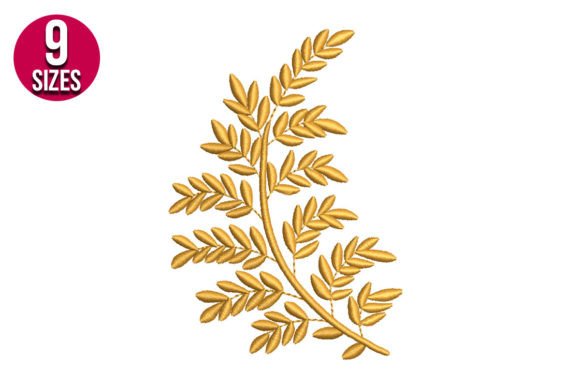
Christmas Tree Branch
A Quiet, Confident Holiday Accent — Not a Statement, But a Signature
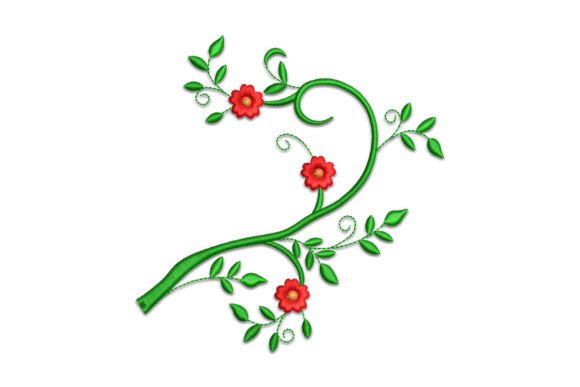
First impression? Christmas Tree Branch doesn’t shout. It breathes. When I opened the embroidery file and previewed it on my digitizing software, I felt that rare calm you get with a design that knows exactly what it is: a slender, organic branch—slightly asymmetrical, with soft tapering needles and subtle weight at the base. No ornaments, no glitter, no bold red bows. Just quiet coniferous rhythm. That’s its strength—and its strategic edge.
Where It Lives Best: Real Projects, Real Shelves, Real Customers
Last week, I stitched Christmas Tree Branch onto a natural linen tea towel for a local boutique’s holiday pop-up. We paired it with a simple monogram in the corner—not centered, not flashy—just resting near the hem like a quiet nod to the season. Customers paused. They didn’t reach for the bolder reindeer or snowflake towels first. They picked up *this one*, turned it over, ran a finger along the stitch line, and said, “It feels like something made *for* winter—not just *about* it.” That’s the handmade product magic: subtlety builds trust faster than spectacle.
It works beautifully on pillow covers (especially oatmeal or charcoal cotton-linen blends), baby swaddles (where heavy fill stitches would stiffen the fabric), and unisex sweatshirt cuffs—stitched small, just above the wrist seam. As a tote bag design? Yes—but only as a single element, low on the side panel or discreetly inside the pocket flap. It’s not built for dominance; it’s built for resonance.
Fabrics & Surfaces: Where It Shines—and Where You’ll Need to Pause
On stable, medium-weight fabrics—cotton twill, brushed poly-cotton, midweight denim—it performs cleanly. The stitch density feels intentional: enough fill to read clearly at 3–4 inches wide, but not so dense it puckers or overwhelms texture. I used a light cutaway stabilizer under a textured oatmeal canvas apron, and the branch held its shape without flattening the weave.
That said: avoid Christmas Tree Branch on highly stretchy knits (like lightweight jersey) unless you’re adding significant backing and reducing tension. On dark fabric, test your thread colors early—medium forest green can disappear against charcoal if your satin stitch isn’t crisp. And on curved surfaces like caps? Scale down to 2.2” max and reposition away from the crown seam. Tiny corners and tight curves blur the needle tips; this design relies on those fine tapering ends for its character.
What It Adds to Your Finished Product—Beyond the Stitch
- Visual appeal: It elevates minimalism without sacrificing festivity—ideal for modern farmhouse, Scandi, or gender-neutral holiday branding.
- Customer trust: Because it’s understated, buyers assume care went into selection—not just seasonal convenience. That translates directly to perceived value.
- Brand consistency: If your craft business leans into nature, quiet luxury, or heirloom quality, Christmas Tree Branch reinforces that voice across apparel, nursery decor, and kitchen textiles.
- Giftability: People gift what they *recognize as thoughtful*. A napkin set embroidered with this branch feels curated—not mass-produced.
Designer Notes You’ll Actually Use (Not Just Scroll Past)
Before stitching your first client piece—or listing your Etsy shop’s holiday collection—do these five things:
- Test on scrap fabric that matches your final substrate *and* stabilizer combo. Watch how the branch’s taper holds up at your chosen size.
- Check thread color contrast in both natural and artificial light. A heathered gray thread might look warm in daylight but cool under store lighting—test both.
- Review stitch density visually in your embroidery software. Look for any overlapping satin columns or tiny isolated running stitches that could snag during washing.
- Confirm hoop size compatibility—especially if you’re layering it with text or another motif. Christmas Tree Branch has clean negative space, but that space still needs breathing room.
- Verify licensing terms before selling finished items or bundling it into digital embroidery kits. This machine embroidery design may be intended for personal use only—or it may include commercial rights. Don’t assume.
When to Reach for Christmas Tree Branch—And When to Walk Past
Reach for it when you’re designing:
- A personalized gift for a couple who hates cliché holiday decor
- An embroidered patch for a sustainable outdoor brand’s limited-edition winter jacket
- Nursery wall art stitched on muslin and floated in a simple frame
- A small-batch run of linen oven mitts for a food-focused Etsy shop
- A printable mockup series showing how a single embroidery file adapts across products (towel, pillow, tote)
Walk past it—if you need bold visual impact at 12”, high-contrast applique, or dense metallic thread coverage. It’s not an applique design. It doesn’t rely on satin stitch borders or heavy fill. It’s a quiet, confident fill stitch + running stitch hybrid that earns attention by being *precise*, not loud.
Final Thought: It’s Not Just a Design—It’s a Design Decision
Choosing Christmas Tree Branch says something about your process: you’re editing, not accumulating. You’re thinking about how a customer will hold a towel, fold a blanket, or wrap a gift—not just how it looks flat on screen. In a market flooded with overdesigned holiday files, this one stands out by stepping back. It gives your handmade product room to breathe—and your buyer room to feel.
Use it well. Test it thoughtfully. And let its quiet branch become part of your signature—not as decoration, but as intention.